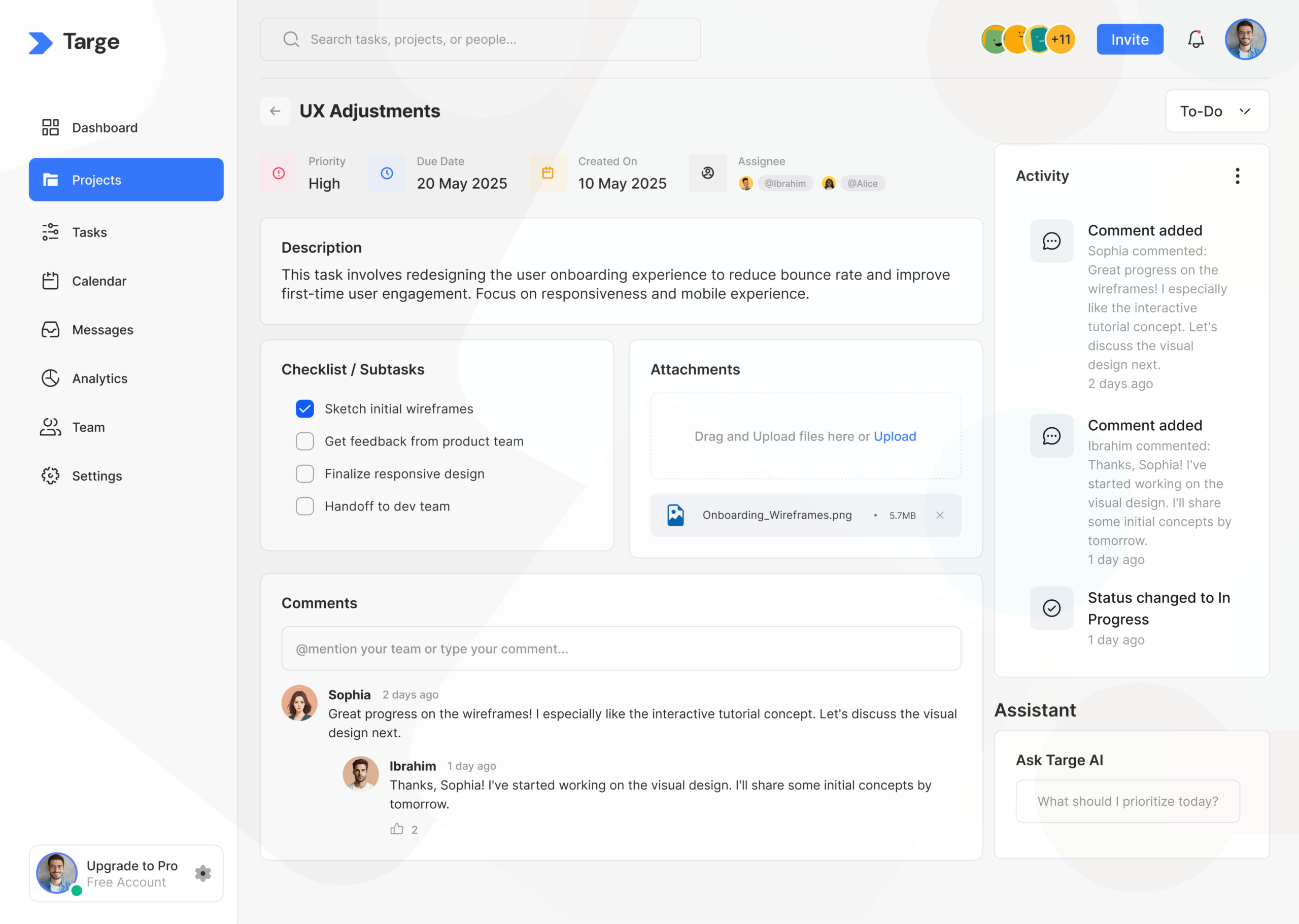
A prototype helps you test an idea or interaction. A minimum viable product, or MVP, lets real users try a focused working product. The decision is not simply which one is cheaper: choose the smallest credible way to answer the uncertainty in front of you.
Teams use these terms differently, so agree what your version will contain, who will use it and what it needs to demonstrate before comparing proposals.
What is a prototype?
A prototype is a representation of an experience used to explore or test a question. It can be a paper flow, clickable screens or a coded demonstration. It may simulate data and actions rather than connecting to working services.
For example, a booking prototype could show selecting a date and confirming a session without sending a real calendar invitation or taking payment. That can be enough to explore whether the steps and labels make sense.
What is an MVP?
An MVP is a limited but working product intended to test a meaningful product assumption with real users. “Minimum” describes the scope, not permission to ignore essential security, privacy, accessibility or operational responsibilities.
A booking MVP might support one type of session, one organiser and a simple confirmation process. It still needs to handle the actual bookings it promises, explain failures and provide a way to resolve problems.
Prototype vs MVP: a practical comparison
| Question | Prototype | MVP |
|---|---|---|
| What does it test? | An idea, journey or interaction | A focused product assumption in real use |
| Must actions be real? | No; actions may be simulated | Core promised actions must work |
| What can it reveal? | Confusing steps, missing information and reactions to a proposed experience | Whether people use a working service and what blocks them |
| What cannot it prove alone? | Production reliability, ongoing demand or willingness to pay | That the product is ready for every audience or use case |
Start with the riskiest question
If you do not yet understand the problem, begin with conversations and observation. A polished prototype of the wrong workflow is still the wrong workflow. If the problem is understood but the interaction is uncertain, a prototype may help you learn before building infrastructure.
If the uncertainty concerns an integration or technical constraint, a small technical experiment may be more useful than clickable screens. If you need to learn whether people return to a working service, a carefully scoped MVP may be appropriate.
Write a testable learning goal
Replace “validate the app” with a specific question. For example: “Can a first-time mentor create a session and explain what the learner will receive without help?” Then choose realistic tasks and observe where people hesitate or misunderstand.
For an MVP, decide what behaviour would justify the next investment. That may be completing a core task, returning to use the service or choosing to pay. Treat these as proposed evaluation measures, not promised business outcomes.
Keep the first scope narrow
- Choose one primary audience and one useful workflow.
- Separate essential steps from conveniences that can wait.
- Document which parts are simulated, manual or automated.
- Agree how errors, support and data handling will work.
- Set a review point before expanding the build.
A founder may handle some operations manually during an early release, provided users receive what is promised and understand relevant limits. Avoid building several dashboards simply because they appear in a competitor’s product.
How portfolio examples can help
Our Targe studio project and FunCity independent concept can support discussions about workflows and interface direction. Their presentation does not, by itself, establish user adoption or validate demand for another product.
If your proposed workflow involves AI actions, also read our guide to user control in AI features.
Our product design and prototyping service starts with the problem and the question to test. Tell us what you need to learn, and we can scope a useful next step.
Contrivea studio notes · 17 October 2026. About the studio.